Generating Leads Is Only the Beginning
Every business wants more customers.
To achieve this, companies invest in marketing, social media, advertising, referrals, and business development activities.
These efforts generate enquiries from potential customers.
However, generating enquiries and converting them into paying customers are two different challenges.
A business may receive dozens of leads every week, yet struggle to convert them because follow-ups are delayed, customer information is scattered, or sales opportunities are not tracked properly.
This is where a structured sales pipeline becomes valuable.
A sales pipeline helps businesses understand how potential customers move from initial enquiry to a completed sale.
At KK ORINE (OPC) Private Limited, we recognize the importance of making sales management more organized and accessible.
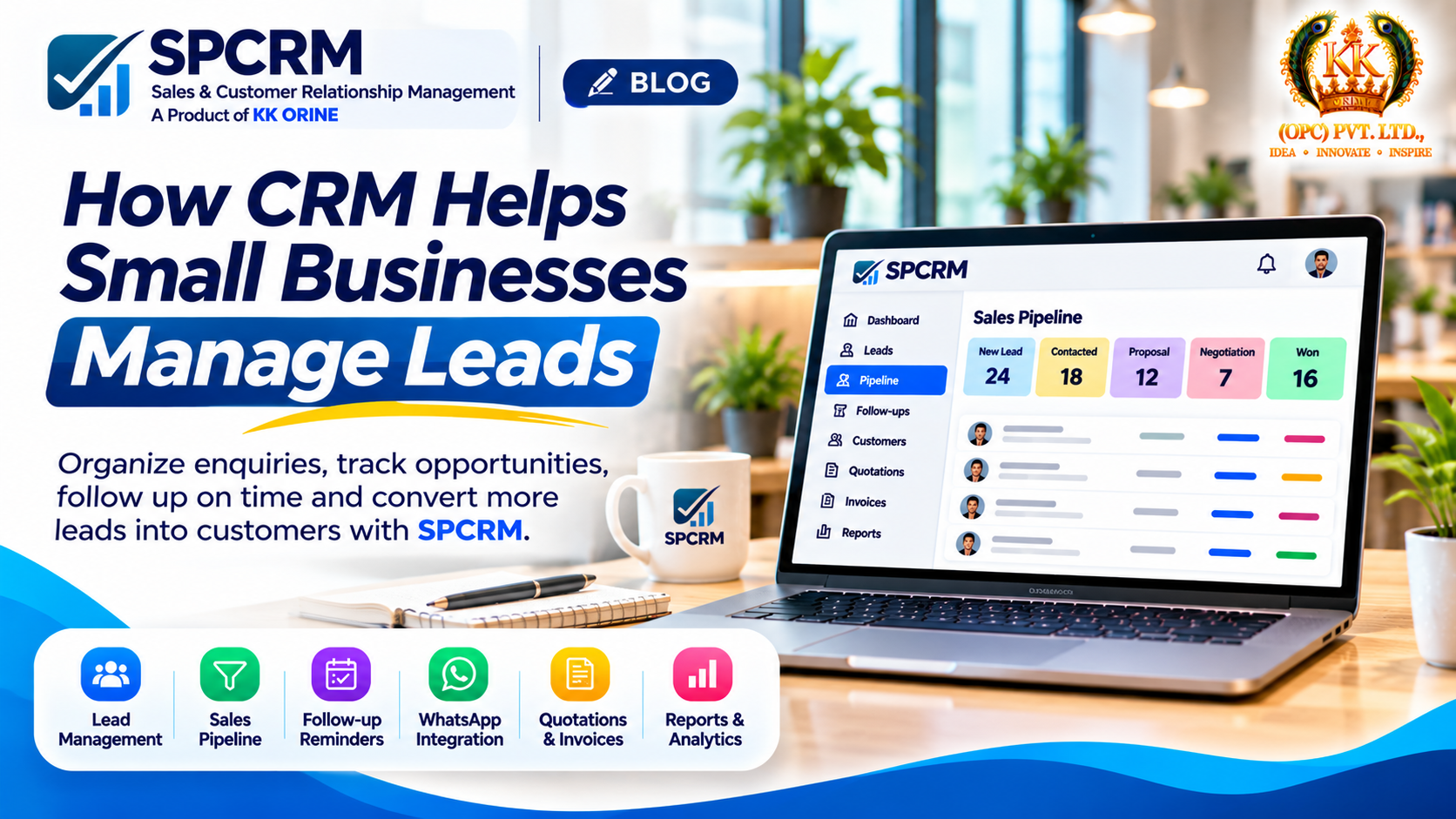
Our CRM platform, SPCRM, is designed to help businesses manage customer information, sales opportunities, follow-ups, and related workflows.
In this article, we'll explore the key stages of a sales pipeline and how businesses can manage them more effectively.
What Is a Sales Pipeline?
A sales pipeline is a structured representation of the stages a potential customer moves through during the sales process.
It helps businesses track opportunities, identify pending activities, and understand which deals require attention.
A typical sales pipeline might include:
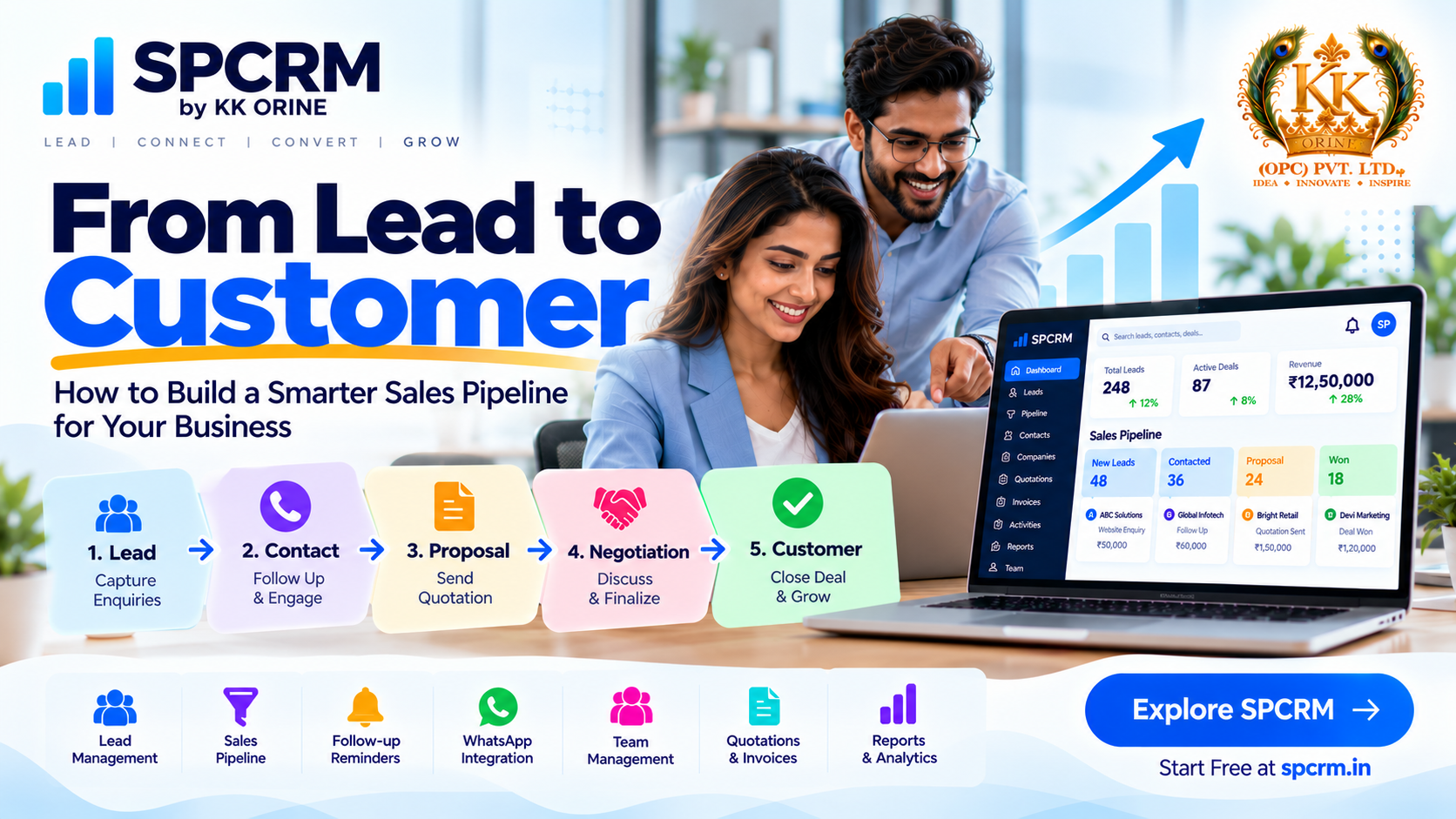
New Lead → Contacted → Qualified → Proposal → Negotiation → Won / Lost
The exact stages depend on the business model, industry, and sales process.
For example, a software company may include product demonstrations and trials, while a manufacturing business may require product samples, quotations, and purchase-order discussions.
The objective is to establish a consistent process for managing sales opportunities.
Stage 1: Capture and Organize Leads
Every sales opportunity begins with an enquiry.
Potential customers may contact a business through its website, WhatsApp, phone calls, email, advertisements, or referrals.
When these enquiries are recorded across multiple tools, tracking them can become challenging.
Businesses should maintain consistent lead information, including:
-
Customer name and contact details
-
Company or organization
-
Product or service requirements
-
Lead source
-
Assigned sales representative
-
Current status
-
Next follow-up date
How SPCRM helps
SPCRM provides lead management functionality that supports structured customer and prospect records.
This helps teams organize their sales-related information instead of relying entirely on scattered spreadsheets.
Stage 2: Contact and Qualify Potential Customers
Not every enquiry represents an immediate buying opportunity.
Some prospects are ready to purchase, while others are comparing options or researching possible solutions.
Lead qualification helps businesses understand which opportunities deserve immediate attention.
Sales teams can ask questions such as:
-
What problem is the customer trying to solve?
-
What product or service are they looking for?
-
When do they plan to make a decision?
-
Who is involved in the purchasing process?
-
What budget or commercial requirements apply?
A structured qualification process helps teams prioritize opportunities based on customer requirements and readiness.
Stage 3: Schedule Follow-ups and Maintain Communication
One of the most important aspects of sales management is consistent communication.
A potential customer may request additional information, ask for a quotation, or need time to discuss a purchase internally.
Without a reminder system, these conversations can easily be overlooked.
Businesses should maintain a follow-up schedule and record relevant communication activities.
How SPCRM helps
SPCRM includes follow-up reminders and WhatsApp integration to support customer communication workflows.
These capabilities help businesses manage important activities and stay organized as sales conversations progress.
Stage 4: Prepare Quotations and Proposals
Once a potential customer expresses serious interest, the next stage often involves sharing commercial information.
Depending on the business, this may include a quotation, proposal, pricing discussion, or product demonstration.
Quotations should clearly communicate the products or services being offered, applicable prices, quantities, and commercial terms.
Keeping quotation information organized can also make future customer discussions easier.
How SPCRM helps
SPCRM includes quotation and invoice functionality to support sales-related documentation.
This allows businesses to incorporate these activities into a more structured sales process.
Stage 5: Manage Negotiations and Track Opportunities
Not every customer accepts the first proposal.
Some request revised pricing, additional information, or changes in commercial terms.
During this stage, maintaining visibility into the opportunity is important.
Sales managers should understand which deals are under negotiation, what actions remain pending, and who is responsible for the next step.
How SPCRM helps
SPCRM's sales pipeline functionality helps businesses track opportunities through different stages.
This supports a clearer view of ongoing sales activities and potential deals.
Stage 6: Close the Deal and Maintain Customer Relationships
When a customer accepts the proposal and completes the necessary purchasing steps, the opportunity can move toward closure.
However, the relationship does not end with the sale.
Businesses may need to provide invoices, respond to customer enquiries, or maintain communication for future requirements.
A structured CRM process can help maintain continuity in customer information and sales records.
Stage 7: Measure Sales Performance
A sales pipeline is not only useful for tracking individual opportunities.
It can also help businesses understand how their sales process is performing.
Important indicators may include:
Lead conversion rate: The percentage of leads that become customers.
Sales cycle length: The time required to move from initial enquiry to a completed sale.
Pipeline value: The total potential value of active sales opportunities.
Follow-up completion rate: The proportion of scheduled follow-up activities completed.
Win rate: The percentage of relevant sales opportunities successfully closed.
Businesses can use these metrics to identify bottlenecks and improve their processes.
SPCRM's reports and analytics functionality supports structured review of sales-related information.
Why Small Businesses Should Start Building a Sales Pipeline Early
A common misconception is that CRM software is only necessary for large organizations.
In reality, establishing a structured sales process early can help small businesses avoid operational challenges as they grow.
A startup with a small team may initially manage enquiries manually.
However, as the business expands, maintaining consistency becomes more difficult.
Implementing an organized process early can help businesses:
-
Reduce dependence on individual employees' memory
-
Maintain consistent customer information
-
Establish clear team responsibilities
-
Improve visibility into sales activities
-
Support better-informed management decisions
The goal is not to introduce unnecessary complexity.
It is to establish a system that supports the business as its requirements evolve.
Introducing SPCRM: A CRM Platform for Growing Businesses
SPCRM is developed by KK ORINE (OPC) Private Limited to help businesses organize their sales operations and customer relationships.
Its currently available features include:
-
Lead Management
-
Sales Pipeline Tracking
-
Follow-up Reminders
-
WhatsApp Integration
-
Team Management
-
Quotations and Invoices
-
Reports and Analytics
SPCRM follows a freemium model, allowing businesses to begin with a free plan and explore paid options as their requirements grow.
Feature access and usage limits may vary depending on the selected plan.
Conclusion: Turn Your Sales Process into a Structured Growth Journey
Generating leads is important, but managing those leads effectively is equally essential.
A structured sales pipeline helps businesses maintain visibility, organize follow-ups, coordinate teams, and understand their sales opportunities.
By establishing clear stages and consistent processes, businesses can create a more organized approach to customer relationship management.
At KK ORINE, we believe practical technology should be accessible to businesses at different stages of growth.
SPCRM is part of our effort to help businesses manage sales activities through a more structured digital workflow.
Ready to organize your sales pipeline?
Explore SPCRM and get started with a free plan.
Visit: https://spcrm.in
SPCRM — Turn Your Enquiries into Growth!
Developed by KK ORINE (OPC) Private Limited
IDEA • INNOVATE • INSPIRE